The Challenge
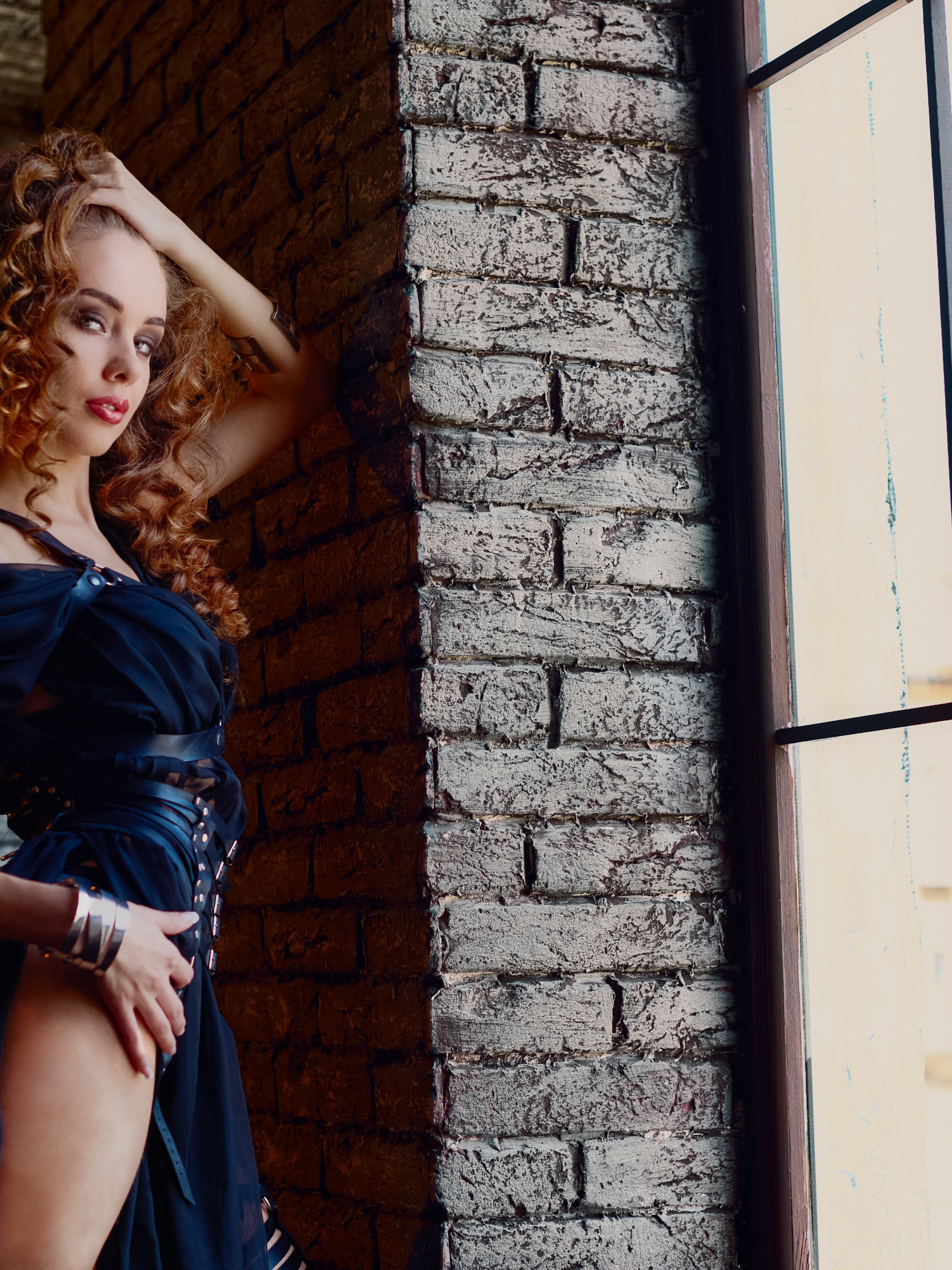
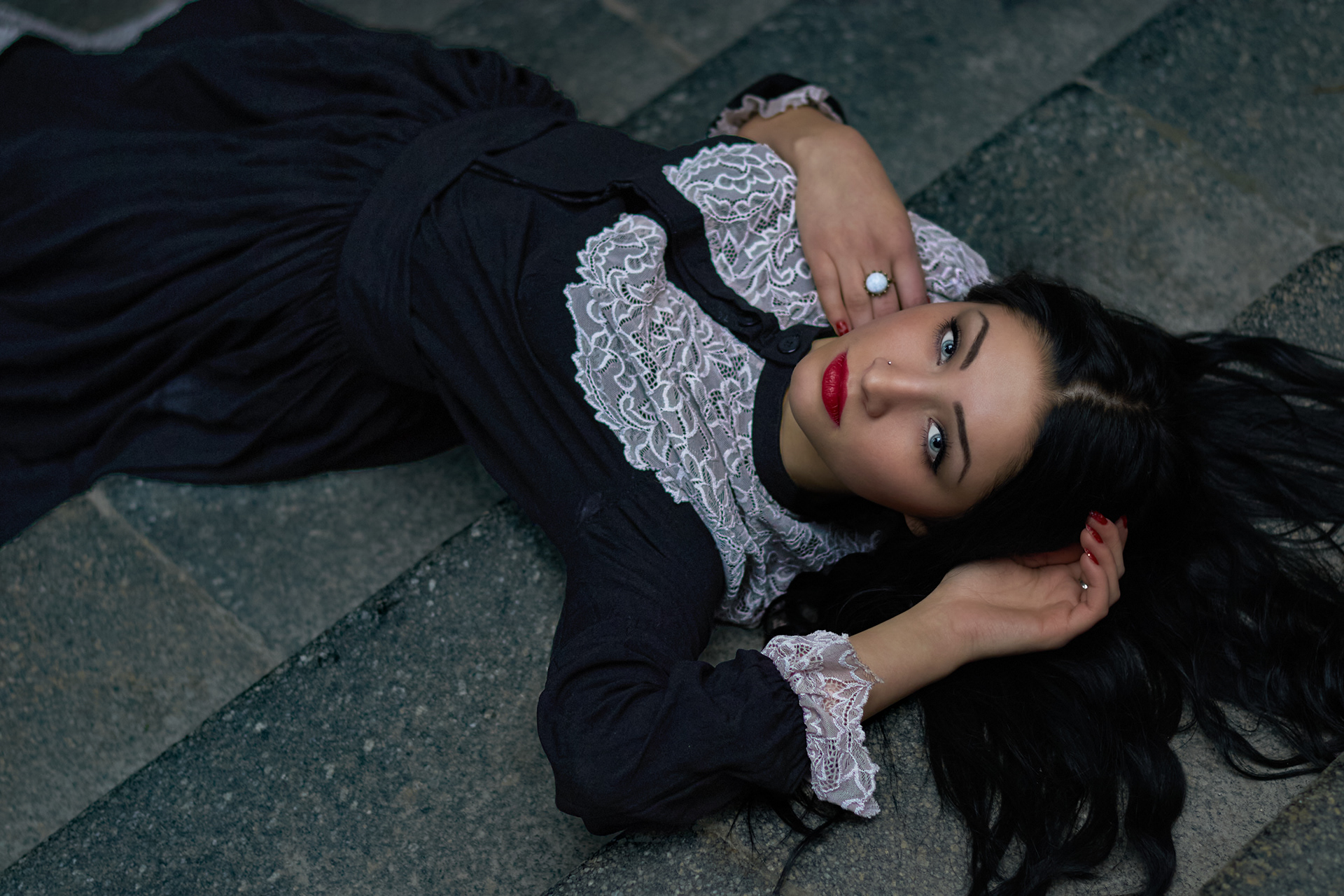
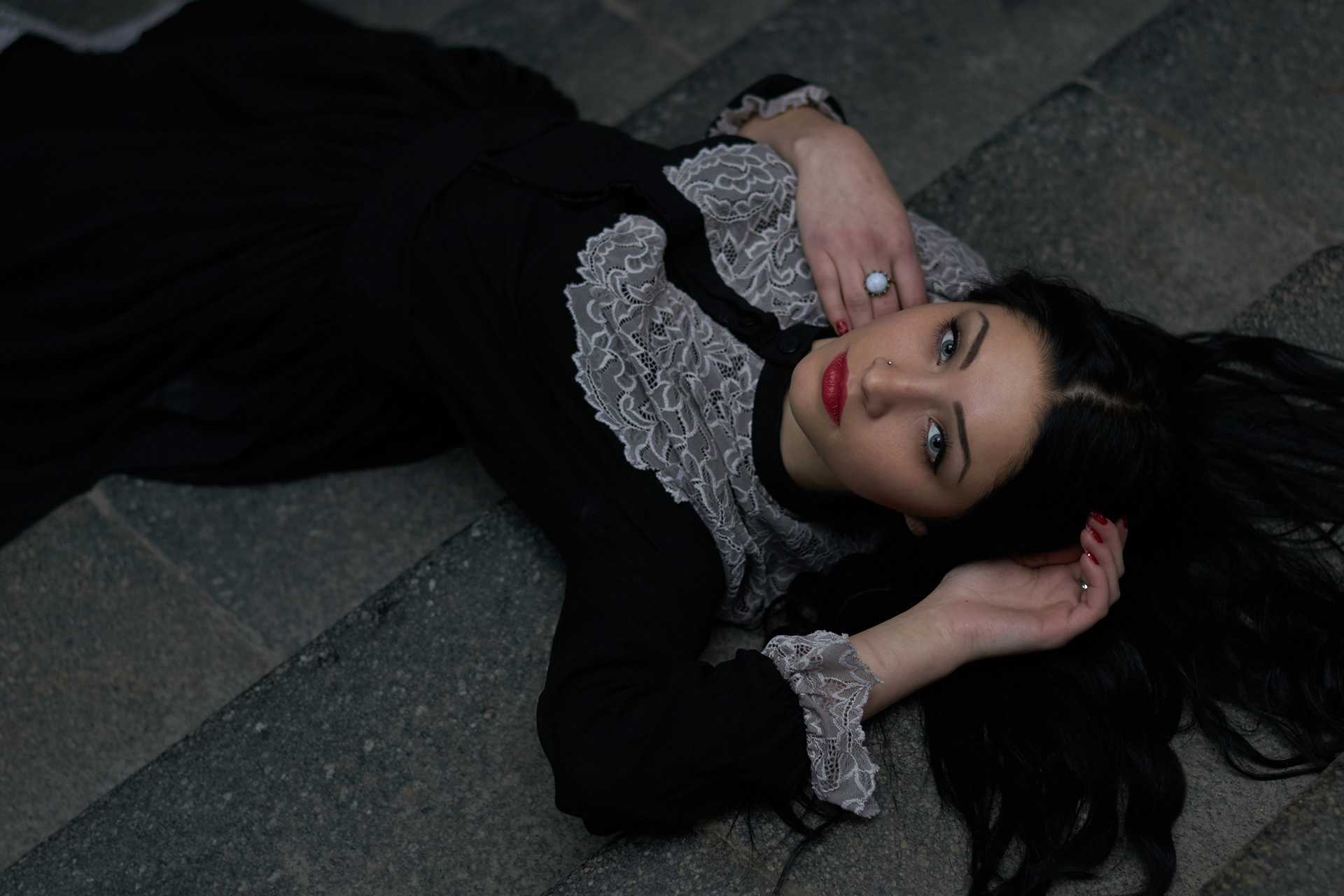
Black fabrics, dark hair and textured stone all compete within the same luminance values. Simply lifting the shadows would flatten the image and destroy its mood. Instead, the retouch focused on increasing tonal information inside the dark values, allowing each element to retain its own identity without sacrificing contrast.
Every adjustment was designed to remain invisible to the viewer. The image should feel naturally captured—not obviously retouched.
Technical Workflow
RAW Development
The workflow began in Capture One Pro, where exposure, white balance and overall tonal balance were established while preserving maximum dynamic range from the original RAW capture.
The image was then exported as a 16-bit TIFF for high-end retouching in Adobe Photoshop.
Non-Destructive Retouching
The Photoshop workflow remained entirely non-destructive throughout the process.
The retouch included:
Initial blemish cleanup
Independent Camera Raw Filter Smart Filters
Face refinement
Clothing refinement
Background optimization
Local tonal enhancement
Manual Dodge & Burn
Selective eye enhancement
Final Curves adjustment
Each Camera Raw Filter pass was applied independently, allowing every region of the image to be optimized without affecting adjacent tonal areas.
Color Refinement
After completing the structural retouch, the image returned to Capture One Pro for final color evaluation and global tonal refinement.
This additional step ensured consistent color rendering while maintaining the original atmosphere created during the RAW development stage.
Final Finishing
The image was then brought back into Photoshop for final selective refinements, including:
Hair definition
Clothing refinement
Background balancing before the final export.
The workflow began in Capture One Pro, where exposure, white balance and overall tonal balance were established while preserving maximum dynamic range from the original RAW capture.
The image was then exported as a 16-bit TIFF for high-end retouching in Adobe Photoshop.
Non-Destructive Retouching
The Photoshop workflow remained entirely non-destructive throughout the process.
The retouch included:
Initial blemish cleanup
Independent Camera Raw Filter Smart Filters
Face refinement
Clothing refinement
Background optimization
Local tonal enhancement
Manual Dodge & Burn
Selective eye enhancement
Final Curves adjustment
Each Camera Raw Filter pass was applied independently, allowing every region of the image to be optimized without affecting adjacent tonal areas.
Color Refinement
After completing the structural retouch, the image returned to Capture One Pro for final color evaluation and global tonal refinement.
This additional step ensured consistent color rendering while maintaining the original atmosphere created during the RAW development stage.
Final Finishing
The image was then brought back into Photoshop for final selective refinements, including:
Hair definition
Clothing refinement
Background balancing before the final export.
Retouching Philosophy
This project was never about making the image brighter. It was about preserving darkness while increasing clarity. Rather than creating artificial separation through excessive contrast or aggressive shadow recovery, the objective was to reveal subtle tonal information already present in the RAW file. Natural skin texture was preserved throughout the process, avoiding plastic surfaces or exaggerated sharpening.
Every adjustment was made with one principle in mind: the retouch should never become the subject of the photograph.
This project was never about making the image brighter. It was about preserving darkness while increasing clarity. Rather than creating artificial separation through excessive contrast or aggressive shadow recovery, the objective was to reveal subtle tonal information already present in the RAW file. Natural skin texture was preserved throughout the process, avoiding plastic surfaces or exaggerated sharpening.
Every adjustment was made with one principle in mind: the retouch should never become the subject of the photograph.
Technical Specifications
Software
Capture One Pro
Adobe Photoshop 2026
Adobe Camera Raw Filter
Capture One Pro
Adobe Photoshop 2026
Adobe Camera Raw Filter
Workflow
Fully Non-Destructive
16-bit TIFF
Smart Filters
Manual Dodge & Burn
Selective Local Adjustments
Fully Non-Destructive
16-bit TIFF
Smart Filters
Manual Dodge & Burn
Selective Local Adjustments
Capture One ↔ Photoshop Hybrid Workflow
Turnaround - 35 minutes
Final Thoughts
High-end retouching is rarely about adding more. More often, it is about knowing what should remain untouched. In portraits like this, the challenge isn't to transform the image—it's to preserve its atmosphere while revealing the details that allow light, texture and depth to coexist naturally.